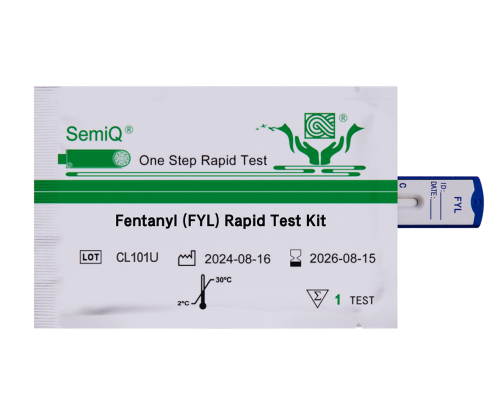
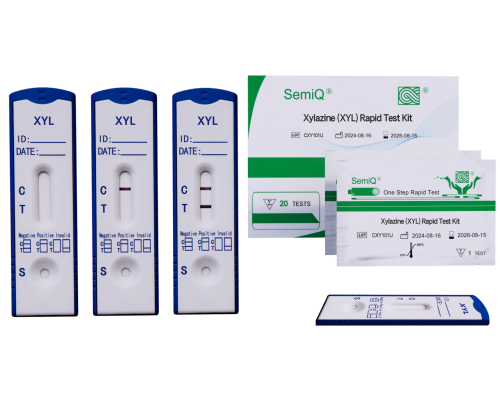
Cocaine is a potent central nervous system (CNS) stimulant and a local anesthetic. Initially, it brings about extreme energy and restlessness while gradually resulting in tremors, over-sensitivity and spasms. In large amounts, cocaine causes fever, unresponsiveness, difficulty in breathing and unconsciousness.
Cocaine is often self-administered by nasal inhalation, intravenous injection and free-base smoking. It is excreted in the urine in a short time primarily as benzoylecgonine. Benzoylecgonine, a major metabolite of cocaine, has a longer biological half-life (5-8 hours) than cocaine (0.5-1.5 hours), and can generally be detected for 24-48 hours after cocaine exposure.
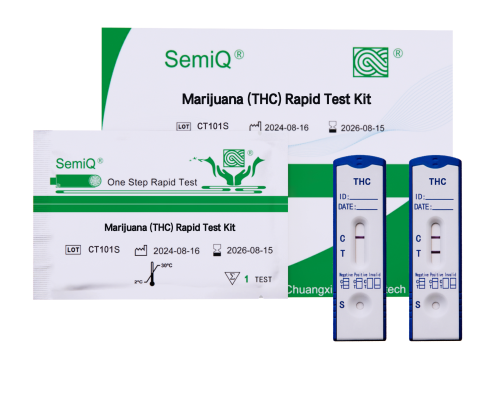
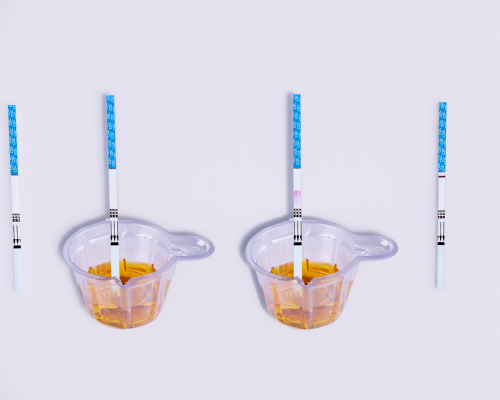
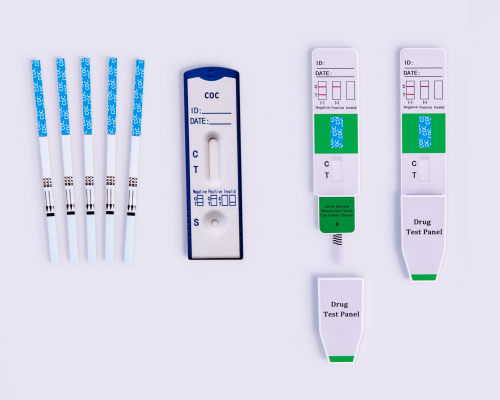
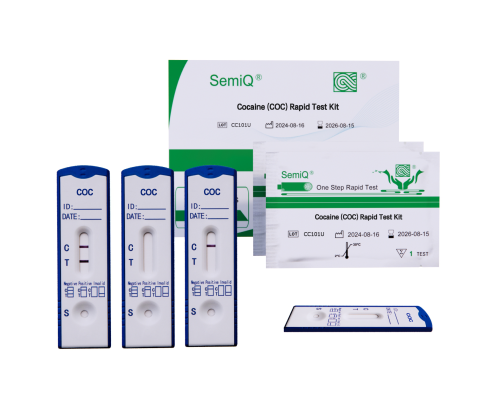
NEGATIVE:Two lines appear. One color line should be in the control region (C), and another apparent color line should be in the test region (T). This negative result indicates that the specimens concentration is below the detectable cutoff level.
NOTE: The shade of color in the test region (T) may vary, but it should be considered negative whenever there is even a faint color line.
POSITIVE: One color line appears in the control region (C). No line appears in the test region (T). This positive result indicates that the specimens concentration is above the detectable cutoff level
INVALID: Control line fails to appear. Insufficient specimen volume or incorrect procedural techniques are the most likely reasons for control line failure. Review the procedure and repeat the test with a new test kit. If the problem persists, discontinue using the test kit immediately and contact your local distributor.
 Follow Official Account