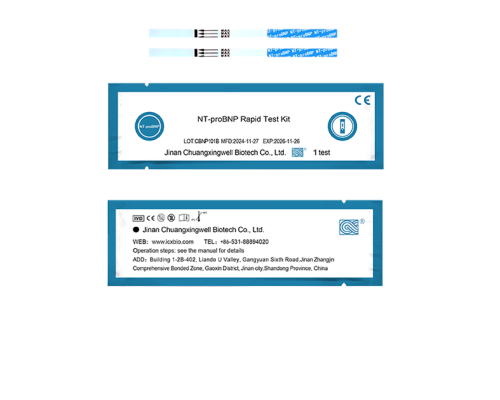
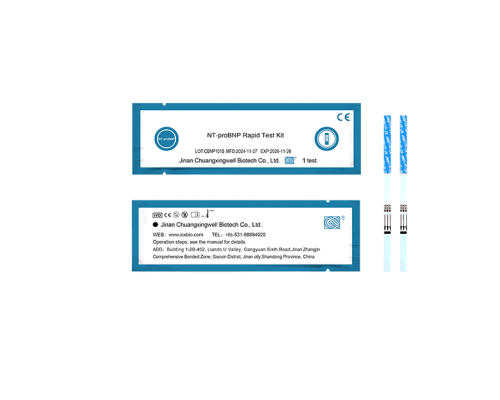
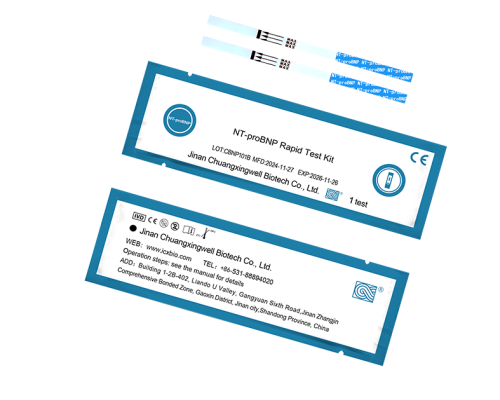
N- terminal pro-brain natriuretic peptide (NT-proBNP) is produced predominantly by the cardiac ventricular myocytes and is released in response to myocardial stress and filling pressure. After stimulation of heart muscle cells, the natriuretic peptides are produced as prohormones (proBNP) and this is cleaved into two fragments which are secreted into the blood stream as the 32 amino acids active BNP and the N-terminal fragment of 76 amino acids designated as NT-proBNP. NT-proBNP is involved in maintaining intravascular volume homeostasis . It can be used to evaluate heart contractile, diastolic dysfunction, and ventricular segmental wall motion coordination. Besides, NT-proBNP has high sensitivity and negative predictive value(>97%). NT-proBNP is more sensitive than BNP in detecting early or mild heart failure . As a gold standard recommended by the European Society of Cardiology, American Heart Association, and American Colege of Cardiology for the diagnosis and prognosis of heart failure, NT-proBNP is used to indicate heart failure patient at the early stage, determine HF risk levels, monitor medical efficiency of HF drug, evaluate prognosis of HF patient and to distinguish dyspnea that caused by HF from other diseases. NT-proBNP is also a risk assessment indicator for Acute Coronary Syndrome.
Furthermore, Both BNP and NT-proBNP levels in the blood may be useful to establish prognosis in heart failure, as both markers are typically higher in patients with worse outcome. The plasma concentrations of both BNP and NT-proBNP are also typically increased in patients with asymptomatic or symptomatic left ventricular dysfunction and is associated with coronary artery disease and myocardial ischemia.

 Follow Official Account