Chuangxing HD19H, a handheld drug detection device based on fluorescent immunoassay technology, rapidly generates quantitative results for illicit drug concentrations in samples (including: hair, fabric, paper, plant material, swabs, blood, urine, saliva, and water samples). It detects dozens of substances including morphine, methamphetamine, ketamine, etomidate, dextromethorphan, cannabis, cocaine, and ecstasy among dozens of illicit substances. Its fluorescent quantitative technology offers superior sensitivity and accuracy compared to traditional colloidal gold methods, delivering precise concentration values to provide more objective data support for law enforcement assessments. Compact and portable with a built-in high-capacity lithium battery, this device is ideally suited for field operations.In addition, the hair drug testing device features a built-in 4G module for uploading data to a network platform, a supplemental lighting camera for taking photos of drug users or samples, and an ID card recognition module for automatically reading ID information. This device is compact, lightweight, and easy to carry, making it suitable for use by police officers in field enforcement scenarios. It can take photos and verify the identities of drug users on-site. The device is equipped with a 4,000-mAh battery that can last for a day (when testing 100 samples).
Chuangxing Hair Drug Testing Analyzer Chuangxing Hair Drug Testing Analyzer features simple operation, easy portability and convenient sampling. It adopts non-invasive hair testing, eliminating the risk of bacterial infection and adapting to various testing environments. The entire testing process takes no more than 10 minutes, greatly improving the work efficiency of grassroots police officers.
The instrument is characterized by high signal-to-noise ratio, high resolution, high wavelength accuracy, and a complete set of testing accessories.
Each Chuangxing Hair Drug Testing Analyzer is a network-connected device that breaks down information silos. It supports real-time testing and upload of data including test subjects, testing items, results, conclusions and time. All data can be wirelessly transmitted through the terminal to the public security intranet big data platform for drug abuse detection.
Public security organs at all levels can monitor the dynamic information of drug-related personnel in real time via the public security private network. All data from the hair testing devices are uploaded automatically, ensuring data security and sharing.
二 . Product Background
With globalization and rapid social development, drug-related crimes in China have shown a rising trend of high incidence and abuse. Relevant national authorities attach great importance to scientific research on drug control, among which improving drug detection technology has become a key part of anti-drug research.
To overcome various drawbacks of urine and saliva testing for drug users and abstinent persons currently used by public security anti-drug police, and to accurately serve, apply to, and meet the needs of actual anti-drug operations, the Ministry of Public Security issued the Specifications for Hair Sample Testing of Drug-Related Persons, which stipulates requirements for the collection, preservation, submission, and testing of hair samples from drug-related individuals.
In accordance with these specifications, our company has developed the Chuangxing HD19H Hair Drug Testing Analyzer. At present, the product has obtained a product inspection report issued by the Quality Inspection Center for Safety and Police Electronic Products of the Ministry of Public Security in terms of testing instruments, systems, and reagents. The hair drug testing system has obtained software copyright and software product certification, and the product has a scientific and technological novelty assessment report issued by a provincial-level science and technology department.
三 . Advantages of Hair Testing
As a legally recognized biological testing sample, hair has incomparable advantages.There are dense capillaries around hair follicles. Drugs or medications present in the blood enter the scalp follicles during hair growth and are fixed by keratin in the hair. Within approximately 3–5 days, drug-containing hair grows out of the scalp surface.
Hair grows at a relatively constant rate. Based on this mechanism, the type, duration, and dosage of drug abuse can be estimated, which is the significance of trace-level detection.
Hair drug trace detection technology also has unique advantages:long detection window, comprehensive drug abuse information, sample resistance to corruption, easy collection, easy storage, and repeatable sampling.
Among these, the long detection window is the most prominent advantage. According to hair length, it can reflect drug use over weeks to months, up to 3–6 months of drug use history. Combined with urine testing, it can comprehensively evaluate the drug abuse status of the subject and meet the needs of anti-drug and drug treatment work.
四 . Technical Principle
Time-Resolved Fluoroimmunoassay (TRFIA) is a special fluorescence analysis method developed on the basis of Fluoroimmunoassay (FIA).It uses lanthanide elements to label antigens or antibodies. According to the luminescence characteristics of lanthanide chelates, fluorescence is measured by time-resolved technology, with signal resolution based on both wavelength and time parameters. This effectively eliminates interference from non-specific fluorescence and greatly improves analytical sensitivity.
Fluorescence analysis overcomes the influence of stray light in ordinary UV-Vis spectrophotometry by using the large difference between fluorescence wavelength and excitation wavelength. Meanwhile, unlike ordinary spectrophotometry, the photodetector is not on the same axis as the excitation light, so excitation light cannot directly reach the detector, greatly improving the sensitivity of optical analysis.
However, for ultra-micro analysis, the influence of stray light from excitation light becomes significant. Therefore, solving the interference of stray light has become the bottleneck for improving sensitivity.
The best way to eliminate stray light is to perform measurement without excitation light present. However, ordinary fluorescent markers have very short fluorescence lifetimes — once excitation stops, fluorescence disappears immediately.
In contrast, a small number of rare-earth metals (Eu, Tb, Sm, Dy) have long fluorescence lifetimes, up to 1–2 ms, which meet measurement requirements. This led to the development of Time-Resolved Fluoroimmunoassay (TRFIA): an analytical method that uses long-lasting fluorescent markers and measures fluorescence intensity after the excitation light is turned off.
The hair drug testing analyzer precisely applies Time-Resolved Fluoroimmunoassay (TRFIA) to quickly detect illegal drugs based on the light beam emitted by fluorescence analysis. It features high signal-to-noise ratio, high resolution, high wavelength accuracy, and complete testing accessories, and can easily meet the requirements for qualitative and quantitative analysis and scientific research of illegal drugs within 5 minutes.
五 . Comparison of Testing Methods
六 Product Features and Advantages● Data Storage: The instrument can store no less than 100,000 records.
● Thermal Printing: Built-in printer supports printing of test results.
● Lighted Photography: Equipped with camera function and manual fill light.
● Data Upload: Built-in 4G module supports uploading test data to the network platform.
● ID Card Recognition: Optional ID card reader for automatic ID information reading.
● Continuous Working Time: Fully charged battery supports at least 100 tests.
● User Management: The instrument is equipped with user management function.
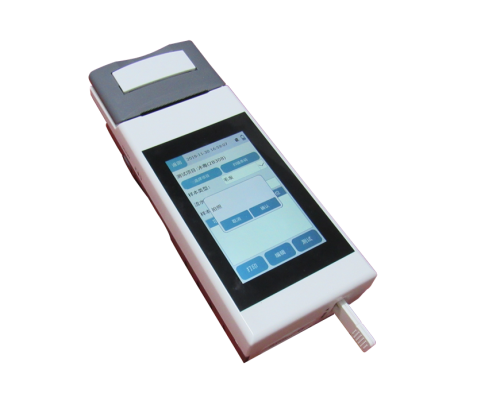
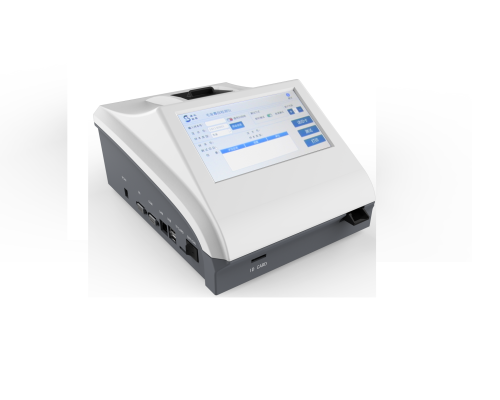 RDTD19H Desktop Fluorescent Hair Drug Detection Instrument
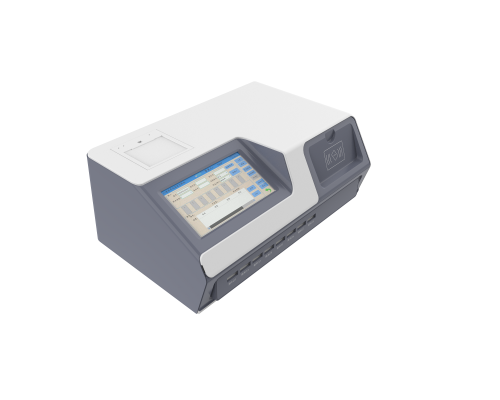 Eight-Channel Fluorescent Hair Drug Detector RDTD19
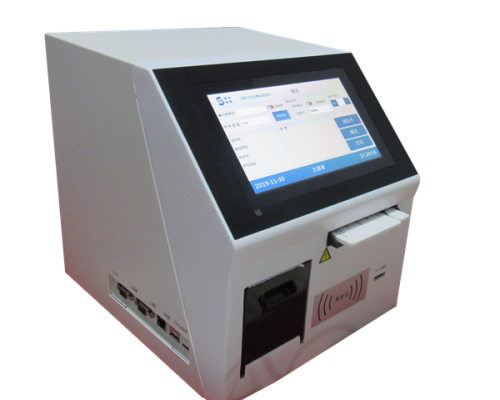 Multi-Card Fluorescent Hair Drug Analyzer HD19HX
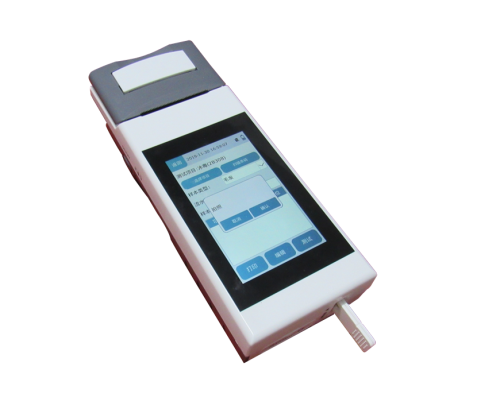 Multi-Card Fluorescent Hair Drug Analyzer HD19HX
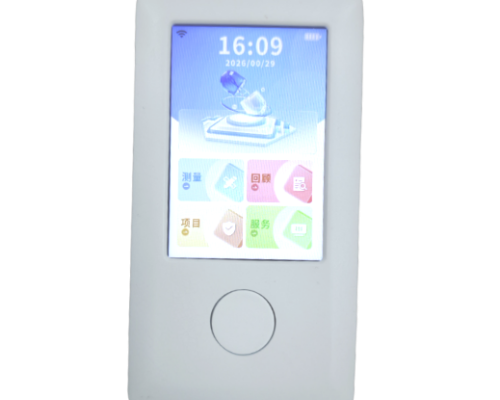 Handheld Fluorescence Drug Detector HD20C
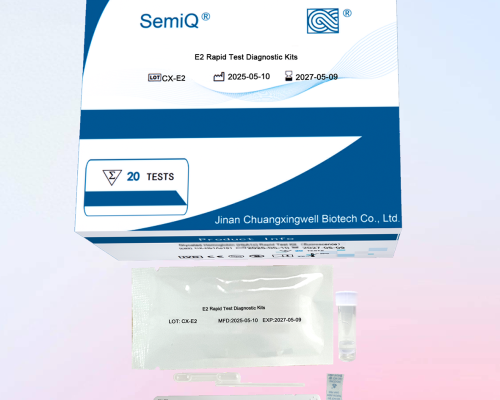 E2 Plug-In Power Supply Rapid Diagnostic Test Kits for Fertility Ovarian Function CE Certified Class II
 Follow Official Account