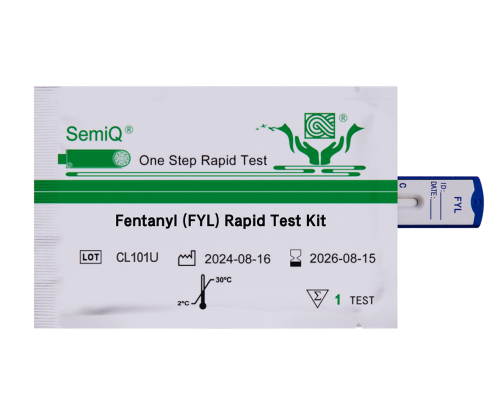
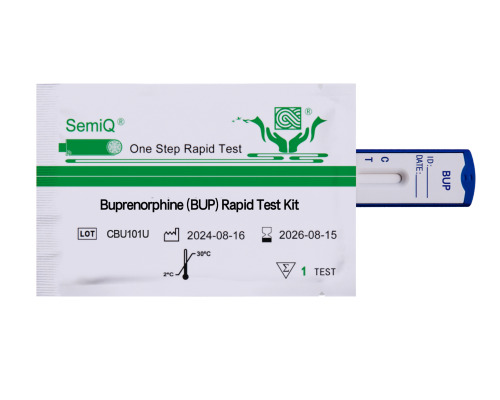
Buprenorphine is a potent analgesic often used in the treatment of opioid addiction. Therapeutically, Buprenorphine is used as a substitution treatment for opioid addicts. Buprenorphine is as effective as Methadone but demonstrates a lower level of physical dependence. Concentrations of free Buprenorphine and Norbuprenorphine in urine may be less than 1 ng/ml after therapeutic administration, but can range up to 20 ng/ml in abuse situations. The plasma half -life of Buprenorphine is 2-4 hours. While complete elimination of a single dose of the drug can take as long as 6 days, t he window of detection for the parent drug in urine is thought to be approximately 3 days. The drug has been abused via intravenous, sublingual, intranasal and inhalation routes.
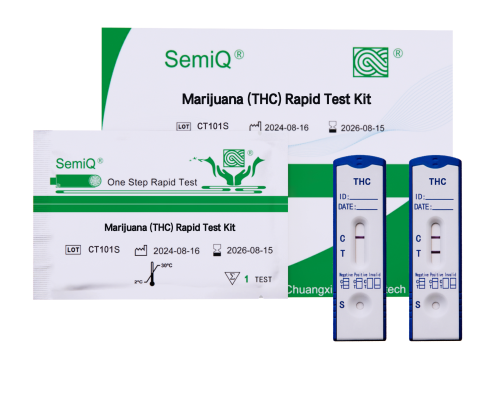
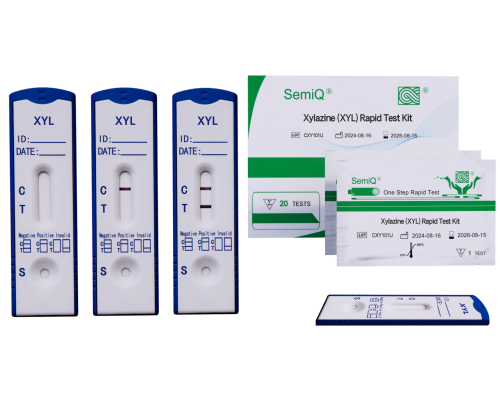
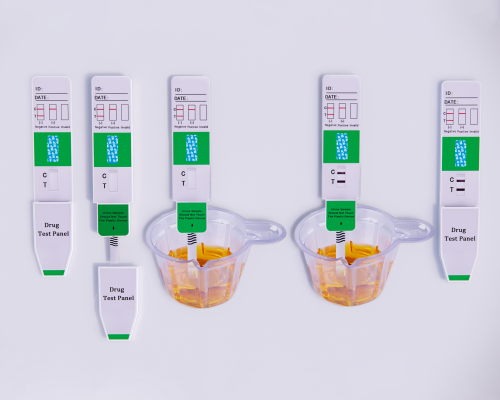
NEGATIVE :Two lines appear. One color line should be in the control region (C), and another apparent color line should be in the test region (T). This negative result indicates that the specimens concentration is below the detectable cutoff level.
NOTE : The shade of color in the test region (T) may vary, but it should be considered negative whenever there is even a faint color line.
POSITIVE : One color line appears in the control region (C). No line appears in the test region (T). This positive result indicates that the specimens concentration is above the detectable cutoff level.
INVALID: Control line fails to appear. Insufficient specimen volume or incorrect procedural techniques are the most likely reasons for control line failure. Review the procedure and repeat the test with a new test kit . If the problem persists, discontinue using the test kit immediately and contact your local distributor.
 Follow Official Account