Gardnerella vaginalis is a facultative Gram-variable anaerobic bacterium belonging to the family Bifidobacteriaceae and is the dominant species involved in bacterial vaginosis (BV). Although BV is a polymicrobial condition with no single causative agent, 100 % of women with BV are colonized with G. vaginalis. G. vaginalis is also a normal commensal of the vaginal micro flora in healthy women. Normally, the vaginal flora is dominated by the lactobacilli species, but when organisms such as Gardnerella begin to overgrow and become the dominant species, this leads to bacterial vaginosis (BV). Bacterial vaginosis (BV) is characterized by the substitution of the vaginal flora, normally dominated by lactobacilli, by a complex and abundant flora of strictly or optionally anaerobic bacteria that are normally found in vagina. Abundant foul–smelling vaginal secretions are the typical symptom of infection by Gardnerella vaginalis (GV).
Gardnerella vaginalis is mainly transmitted through sexual contact. I n addition to the peculiar smell released when the disease occurs, there are often itching symptoms. The bacterium can also cause cervicitis, unclean abortion, postoperative infection, urinary tract infection and other diseases. Because the inflammatorn reaction is not obvious, the medical definition of this disease is vaginal disease, not vaginitis. The s ymptoms of infection in men is not obvious, so it is easy to spread Gartner vaginal bacteria .
Allow the test device, specimen, buffer, and/or controls to equilibrate to room temperature (15-30 ℃ ) prior to testing.
1. Place a clean extraction tube in the designated area of the workstation. Add 10 drops (approx. 560 μ l) extraction buffer into the tube.
2. Put the specimen swab into the tube, vigorously mix the solution by rotating the swab forcefully against the side of the tube for least ten times (while submerged). Best results are obtained when the specimen is vigorously mixed in the solution.
3. Allow the swab to soak in the extraction buffer for 1 minute prior to the next step. Squeeze out as much liquid as possible from the villi part of the swab by pinching the outer wall of the extraction tube by finger as the swab is removed. At least 1/2 of the extraction buffer solution must remain in the tube for adequate capillary migration to occur.
4. Discard the swab in a suitable bio-hazardous waste container, then fit on the extraction tube cap onto the extraction tube.
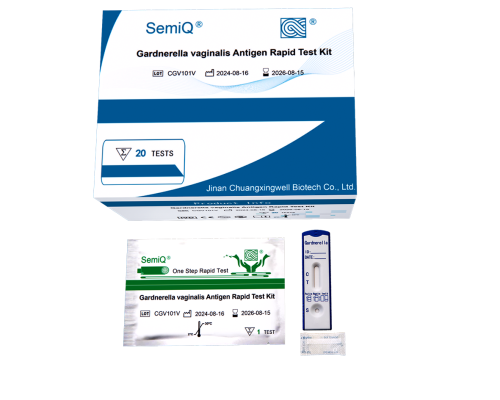
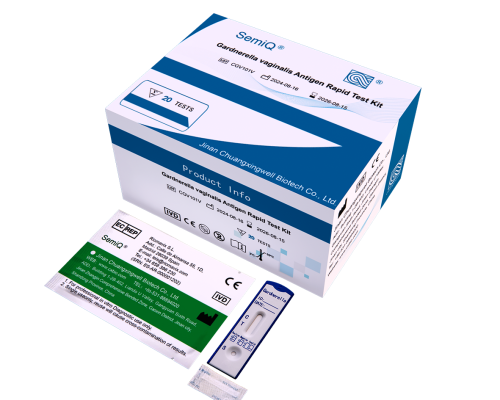
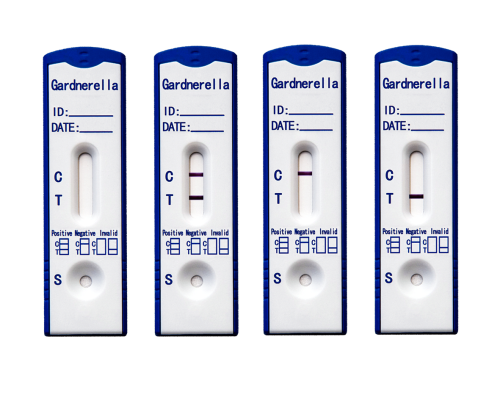
5. Remove the test cassette from its sealed pouch, and place it on a clean and level surface. To obtain a best result, the assay should be performed within one hour.
6. Add 3 drops (approx. 100 μ l) of extracted specimen from the extraction tube to the specimen well (S) on the test cassette. Please avoid trapping air bubbles in the specimen well and do not drop any solution in observation window.
7. Wait for the colored line(s) to appear. The result should be read at 15 minutes, do not interpret the results after 20 minutes.
Note: It is suggested not to use the buffer, beyond 6 months after opening the vial.
 Follow Official Account